
3 Signs You Need a Termite Inspection in Richmond (Before the Spring Swarm)
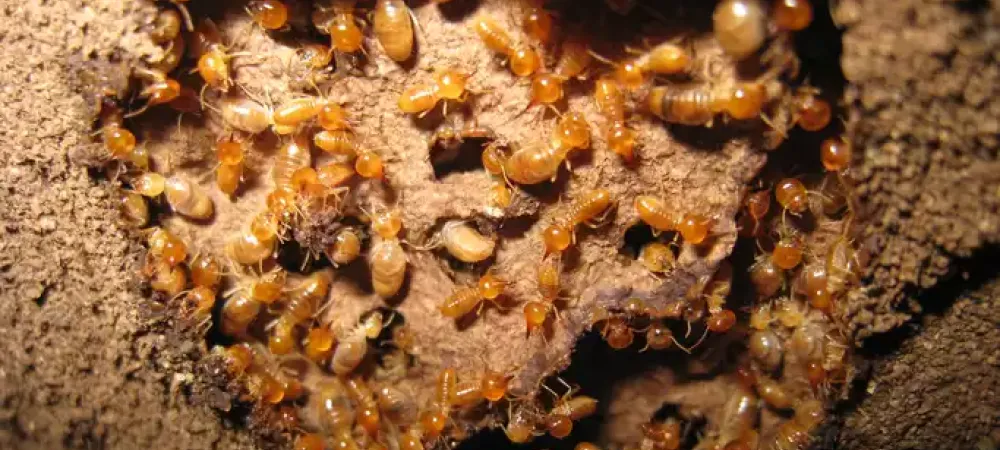
Most Richmond homeowners first learn they have termites when they see a spring swarm: dozens of winged insects gathering around windows or interior lights on a warm March or April afternoon. That swarm gets attention, but here's what it actually tells you. A termite colony large enough to produce swarmers has typically been established and actively feeding for three to five years. The swarm is not the beginning of the problem. It's evidence the problem has been underway for a long time.
The good news is that termites leave earlier, subtler signs. Catching those signs in late winter or early spring, before swarm season peaks, means you're scheduling an inspection on your terms rather than reacting to visible damage. This guide covers the three most reliable pre-swarm warning signs Richmond homeowners should check for now.
Quick Answer: What Are the Signs of Termites Before They Swarm?
The three most telling pre-swarm warning signs are mud tubes on foundation walls or crawlspace supports, wood that sounds hollow or feels soft when tapped or probed, and moisture conditions in the crawlspace or foundation area that create an ideal termite environment. Any one of these warrants a professional inspection before Richmond's swarm season runs from March through June. For what to watch for once swarmers appear, see our guide on identifying spring termite swarmers in Virginia.
Before You Read On: Fast Facts
- Termites rarely emerge from soil, mud tubes, or wood while feeding, meaning most infestations show no obvious surface signs until significant structural damage has already occurred.
- Richmond's swarm season peaks March through June, but termite workers are active year-round in Virginia's climate. An inspection in late winter catches a colony at its most detectable, before spring activity accelerates feeding rates.
- A colony large enough to swarm can include hundreds of thousands of workers and may have been feeding inside your structure for years before the first winged termite appears.
Why February and March Are the Best Months to Get a Termite Inspection in Richmond
Timing matters more than most homeowners realize. Virginia Cooperative Extension notes that Eastern subterranean termites, the dominant species in Richmond, swarm primarily from March through May, on warm days following rain (VCE Fluvanna). That window arrives faster every year as Richmond's winters have grown shorter and milder.
Scheduling an inspection in late winter or early spring serves two purposes. First, a licensed technician can identify active colonies before feeding rates accelerate with the warmer temperatures of spring. Second, if treatment is needed, getting ahead of swarm season means the colony is disrupted before it disperses reproductive termites that could start new satellite colonies nearby or in adjacent structures.
In our experience treating Richmond-area homes for 24 years, the homeowners who call in February and March consistently face lower repair costs and simpler treatment plans than those who call after a confirmed swarm in May or after structural damage is found during a summer renovation. The following three signs are your signal to act now.
Sign 1: Mud Tubes on Your Foundation, Piers, or Utility Lines
Mud tubes are the single most reliable pre-swarm indicator that subterranean termites are actively using your structure. Termite workers cannot survive in open air; they require moisture and protection at all times. To move between soil and wood, they construct pencil-thin tunnels from soil, wood particles, and saliva. These tubes allow foraging workers to reach structural wood while remaining fully sheltered from air exposure and predators.
Virginia Cooperative Extension describes this hidden behavior directly: termites "enter our buildings from beneath the soil surface and forage within the wood," and "we usually do not detect their presence until damage becomes evident or termite swarming takes place" (Miller). Mud tubes change that equation because they are a visible, physical sign of termite travel routes before swarming occurs.
Check these locations closely, ideally with a flashlight in early spring:
- The exterior foundation wall, including mortar joints in brick foundations and concrete block walls
- Crawlspace piers, posts, and support columns
- Pipes, conduit, and utility lines that enter the structure from below grade
- The interior of the crawlspace along the sill plate and rim joist area
- Any stored lumber, wood scraps, or debris in or near the crawlspace
Mud tubes that appear dry or flattened may look inactive, but don't assume they are. Termites regularly abandon and rebuild tubes, and a dried tube on the exterior of a foundation wall may connect to a very active colony inside the structure. Any mud tube, active or not, warrants a professional inspection. A technician can probe the tube, check for live workers, and trace the likely travel path to identify the colony source.
Sign 2: Wood That Sounds Hollow, Feels Soft, or Shows Surface Distortion
Subterranean termites consume wood from the inside out, eating along the grain and leaving only a thin outer shell intact. This is why a joist or baseboard that looks fine on the surface can be almost entirely consumed inside. The EPA recommends that homeowners "examine, by probing, exposed wood for hollow spots" using a screwdriver or similar tool as one of the key methods of discovering termite activity before a confirmed swarm (EPA).
This kind of inspection is especially important for Richmond homes built before 1970, where crawlspace framing, floor joists, and sill plates have had decades of exposure to the moisture conditions that termites prefer. Our post on protecting Richmond's historic homes from termites covers why older construction is particularly vulnerable and what those properties specifically need.
Here's where and how to check before the spring swarm season:
- Tap along baseboards at floor level throughout the house. Work your way around each room, especially along exterior walls and in corners. A solid thud is normal. A dull, papery hollow sound in wood that should be structurally dense is a red flag worth noting, especially if it covers a continuous section rather than a single spot.
- Probe exposed floor joists and sill plates in the crawlspace. Use a flathead screwdriver to press firmly into the wood surface. In undamaged wood, this requires real force. If the screwdriver sinks in with little resistance or the surface crumbles into a honeycomb pattern, that wood has been actively fed on. Even partially consumed framing members can affect structural integrity over time.
- Look for surface distortion that doesn't match a known water event. Termite activity behind walls and under floors causes subtle framing shifts. Paint that appears blistered without a plumbing leak, drywall that looks faintly warped near the base, or floors that feel springy or soft in a localized area are all worth investigating professionally.
- Check door and window alignment. A door or window that suddenly sticks or fails to latch cleanly, particularly one that worked fine last fall, can indicate that framing around the opening has shifted due to ongoing wood loss from feeding activity. Seasonal humidity swelling is common in older homes, but unexplained alignment changes in late winter, when humidity is at its lowest, deserve a closer look.
Sign 3: Moisture Problems or High-Risk Conditions in Your Crawlspace
The third sign is not evidence of termites yet. It's evidence that your home is giving them everything they need to establish. Subterranean termites require moisture to survive. Their colonies are based in soil, and the wood they target must retain enough moisture to support foraging workers. A dry, well-ventilated crawlspace is a far less hospitable environment than a wet, unencapsulated one. Richmond's humid climate and clay-heavy soil mean that many crawlspaces here hold moisture consistently throughout the year.
These specific conditions in your crawlspace mean your risk of active termite infestation is elevated, and an inspection is overdue:
- Visible moisture on the vapor barrier, ground, or framing members. Water pooling in a crawlspace or condensation forming on floor joists creates the persistent moisture environment that termite colonies require to maintain foragers in an above-ground structure.
- Evidence of wood rot or fungal growth on framing. Rotting wood is both a sign of sustained moisture and a secondary food and entry point for termites. Where there is rot, termites are easier to establish and harder to detect because damage patterns overlap.
- Soil contact with wood framing or sill plates. Direct wood-to-soil contact removes the gap that makes subterranean termite travel visible as a mud tube. When wood touches soil, termites can move directly into the structure without building any visible tunnel.
- Mulch, leaf debris, or stored lumber against the foundation. Organic material piled against the foundation keeps the soil and masonry moist and provides a supplemental cellulose source that brings termite foragers to the base of the structure.
- An unencapsulated crawlspace with inadequate ventilation. Crawlspace encapsulation reduces the moisture conditions that make termite establishment easier, and it's one of the most durable structural improvements a Richmond homeowner can make for both pest prevention and energy efficiency. For a fuller picture of what unchecked crawlspace conditions allow, see our post on stopping pests from living in your crawlspace.
What to Do Right Now: Before the Swarm Season Arrives
If any of the three signs above match something you've noticed in your home, don't wait for the first warm day in March to call. Pre-swarm inspections are easier to schedule, faster to complete, and result in earlier treatment if a colony is found. These steps are worth taking now.
- Walk the exterior foundation line in good lighting and look for mud tubes, cracks at utility entry points, and any wood-to-soil contact with decks, steps, or siding.
- Pull back mulch from the foundation edge and maintain at least a four-inch gap between any organic material and the structure.
- Fix any known gutter, downspout, or grade drainage issues that direct water toward the foundation.
- Have the crawlspace evaluated for moisture levels, vapor barrier condition, and ventilation adequacy.
- Schedule a professional termite inspection, particularly if the home hasn't had one in the past 12 months or lacks an active monitoring system.
Schedule Your Pre-Swarm Inspection with Pest Solutions
Termites are most costly when they're discovered late. You and I both know that "I'll deal with it when I see the swarm" is exactly the window where small problems become structural repairs. The three signs covered here, mud tubes, compromised wood, and high-risk moisture conditions, are the ones that show up before swarming begins. They're your early warning system if you know what to look for.
Pest Solutions's licensed technicians provide free termite inspections for Richmond-area homeowners, including a full crawlspace assessment, foundation perimeter check, and interior framing review. If treatment is needed, our Richmond termite control services use the Sentricon system to eliminate entire colonies without trenching or drilling through original masonry, backed by a $250,000 structural damage warranty.
Don't wait for the swarm to confirm what the warning signs already told you. Request your free termite inspection today or call 540-264-9591. Getting ahead of swarm season is the best investment Richmond homeowners can make before spring arrives.
Sources
- Miller, Dini M. "Signs of Subterranean Termite Infestation." VCE Publications, Virginia Cooperative Extension, Virginia Tech, www.pubs.ext.vt.edu/444/444-501/444-501.html.
- United States Environmental Protection Agency. "Termites: How to Identify and Control Them." EPA.gov, 20 Oct. 2025, www.epa.gov/safepestcontrol/termites-how-identify-and-control-them.
- Virginia Cooperative Extension. "Termite Swarm Season." Fluvanna Master Gardeners, 24 Jan. 2011, www.fluvannamg.org/termite-swarm-season/.