
The James River Effect: Why Richmond's Mosquito Problem is Unique (And How to Beat It)
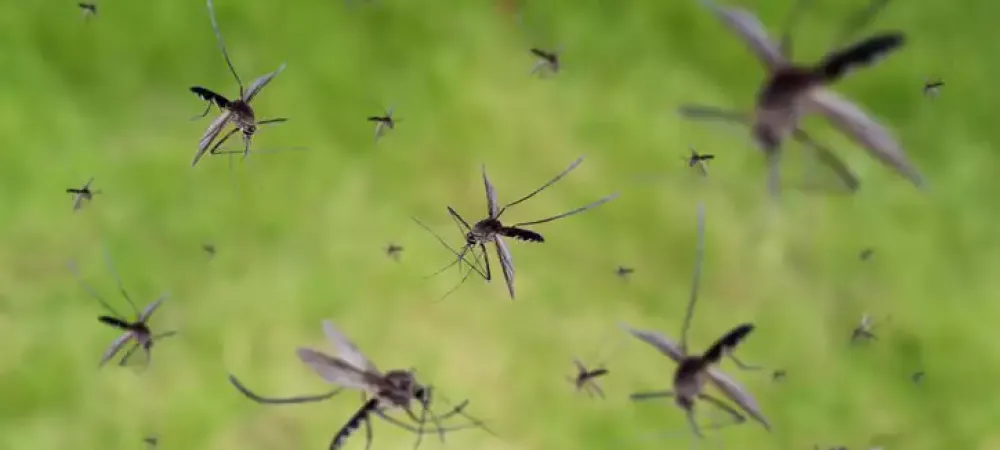
Richmond consistently ranks among the top 20 worst mosquito cities in the country, and most homeowners assume it's just the heat and humidity. The real story is more specific than that. The James River, its floodplains, and Richmond's unique geography create a mosquito environment that sets this area apart from almost anywhere else in Virginia. If you feel like mosquitoes hit your yard harder and earlier than they should, you're not imagining it.
Understanding what's driving the problem is the first step toward actually solving it. This guide breaks down the science behind Richmond's mosquito season, which species are causing the most trouble, and the practical steps that make a real difference.
Quick Answer: Why Are Richmond's Mosquitoes So Bad?
Richmond's location along the James River creates repeated flooding events that hatch massive populations of floodwater mosquitoes throughout the summer. Combined with the city's warm, humid climate and mild winters, mosquitoes thrive here from April through October, with populations spiking sharply after every significant rain event.
Fast Facts: Richmond's Mosquito Problem
- The James River's floodplain seeds billions of dormant mosquito eggs each season, which hatch in waves every time the water rises after rain.
- Virginia is home to 58 known mosquito species, and Richmond's urban landscape hosts several of the most aggressive ones, including floodwater and house mosquitoes capable of carrying West Nile virus.
- Mosquito season in Richmond typically runs from April through October, but mild winters are allowing populations to establish earlier and linger longer each year.
What Makes Richmond's Mosquito Season Different from the Rest of Virginia?
Richmond sits at the fall line of the James River, a geographic boundary where the Piedmont plateau drops down to the coastal plain. This creates a naturally dynamic waterway prone to significant flooding after heavy rainfall. Every time the James rises and recedes, it leaves behind temporary pools and saturated soil in the surrounding floodplain. Those conditions are exactly what certain mosquito species are built to exploit.
According to Virginia Cooperative Extension, "excess rain in the spring will provide plenty of breeding places for mosquitoes," and that shallow, still water is particularly attractive for laying eggs, even in containers holding only several ounces of water (Dellinger). When you scale that principle to the entire James River floodplain running through central Richmond, the breeding potential is enormous.
Add Richmond's consistently warm summers, humid air, and mild winters to that equation, and you have a city where mosquitoes don't just show up in season; they thrive. Virginia winters rarely get cold enough or long enough to kill off overwintering adults or destroy dormant eggs laid in soil. As a result, populations tend to bounce back faster and stronger each spring.
We've seen this pattern repeatedly across 24 years serving the Richmond area. Neighborhoods within a few miles of the James River corridor, including parts of Henrico, Chesterfield, and the city itself, tend to see mosquito pressure weeks earlier than properties farther inland, and it doesn't let up until October.
How Flooding Actually Triggers Mosquito Outbreaks in Richmond
Not all mosquitoes breed the same way. The species responsible for Richmond's worst summer surges are floodwater mosquitoes, primarily Aedes vexans, a species perfectly adapted to the James River's behavior. Understanding their lifecycle explains why mosquito pressure can spike so dramatically in the days after a storm.
- Eggs are laid in moist floodplain soil. Female Aedes vexans don't lay eggs directly in standing water. They deposit eggs individually on damp soil just above the waterline, in areas they know are likely to flood. Those eggs can sit dormant for years, surviving drought and cold, waiting for the right conditions.
- A rain event or river rise floods the soil. When water levels rise after a heavy storm or the James River swells, those dormant eggs get the moisture signal they need. The CDC confirms that following any significant flooding event, "mosquito eggs laid in the soil by floodwater mosquitoes during previous floods hatch," resulting in very large mosquito populations emerging within days (CDC).
- Larvae develop rapidly in warm water. Richmond's summer temperatures accelerate larval development. A newly flooded floodplain pool can go from eggs to biting adults in as little as seven days when temperatures are high. This means a single July thunderstorm can translate into a new wave of mosquitoes by the following weekend.
- Adults spread far from the water source. Aedes vexans are strong fliers, capable of traveling several miles from their breeding site to find a blood meal. That's why homeowners in Midlothian, Mechanicsville, and Short Pump all feel the effects of James River flooding, even when their own yards look perfectly dry. Understanding mosquito breeding hotspots in your yard can help you reduce what's within your control, even when regional sources are at work.
- Urban conditions sustain the pressure all season. Once the floodwater wave passes, Richmond's urban environment keeps mosquitoes going. Clogged gutters, birdbaths, low spots in lawns, and under-deck shade all provide secondary breeding habitat for species like Culex pipiens, the Northern House Mosquito. This species thrives in stagnant urban water and is the primary vector for West Nile virus in Virginia.
Which Mosquito Species Are Actually Biting You in Richmond?
Virginia is home to 58 known mosquito species, but three are responsible for most of the biting in Richmond neighborhoods. Knowing which one you're dealing with helps you target the right solution.
Aedes vexans (Inland Floodwater Mosquito) is the species most directly tied to the James River. These mosquitoes are aggressive biters, most active in the evening, and will travel miles to find a host. They surge after rain events and are especially common in neighborhoods along river corridors. While primarily a nuisance biter, research has confirmed they can carry West Nile virus and dog heartworm.
Culex pipiens (Northern House Mosquito) is the species most responsible for disease risk in urban Richmond. It breeds in stagnant, organically rich water, the kind found in neglected gutters, drainage ditches, and standing puddles in residential areas. Culex pipiens is the primary vector for West Nile virus in Virginia, and it bites primarily at dusk and dawn. You and I both know that evening time on the patio is exactly when this species is at its worst.
Aedes triseriatus (Eastern Treehole Mosquito) breeds in water-collecting tree holes and shaded containers near homes. It's a daytime biter that thrives in wooded suburban yards, making it particularly common in the heavily tree-covered neighborhoods of Henrico and Chesterfield counties. This species is a potential carrier of La Crosse encephalitis, which disproportionately affects children. For more on the health risks posed by pests that bite in Virginia, our blog covers what you need to watch for.
What Richmond Homeowners Can Do to Cut Mosquito Pressure
You can't control the James River, but you can control your property. In our experience, homeowners who consistently address the controllable factors on their own land see noticeably fewer mosquitoes, even in high-pressure seasons. Focus on eliminating secondary breeding habitat and reducing the conditions that allow floodwater populations to settle in after they arrive from elsewhere.
- Empty standing water at least once a week. Birdbaths, plant saucers, buckets, and wheelbarrows are all primary breeding sites. A female mosquito needs only an inch of still water to lay 100 to 200 eggs.
- Clear and flush gutters every spring and after heavy storms. Clogged gutters are one of the most productive mosquito breeding sites on any property, and they're easy to overlook.
- Fill in low spots in your lawn. Depressions that hold water for more than a week after rain give floodwater mosquito eggs exactly what they need to hatch. Regrading these areas provides long-term relief.
- Trim back dense vegetation. Adult mosquitoes rest in cool, shaded vegetation during the day. Keeping shrubs, tall grass, and ground cover trimmed reduces resting habitat near your outdoor living spaces.
- Use larvicide dunks in water features you can't drain. Decorative ponds, rain barrels, and retention features can be treated with Bti-based larvicides that kill larvae without harming pets, birds, or beneficial insects.
- Protect against ticks and fleas while you're at it. Richmond's outdoor conditions that favor mosquitoes also support tick and flea populations. Flea and tick control paired with mosquito treatment gives your yard comprehensive protection against biting pests.
- Use EPA-registered repellents when spending time outdoors. Products containing DEET, picaridin, or oil of lemon eucalyptus are the most effective personal protection options. See our guide on how to protect yourself from mosquitoes for more details on repellent use.
When DIY Isn't Enough: Signs You Need Professional Mosquito Control
DIY prevention is worth doing, but it has real limits. Richmond's floodwater mosquito surges are a regional-scale problem. No amount of yard maintenance stops the first wave of Aedes vexans from arriving after a major rain event. That's the point where consistent, professional-grade treatment makes the difference between a manageable summer and one spent hiding indoors.
You're likely past the DIY threshold if:
- Mosquito biting activity persists even after you've eliminated all visible standing water on your property.
- Population pressure spikes sharply every time it rains, with biting adults appearing within a week of any significant storm.
- You have wooded areas, low-lying sections of yard, or properties near creeks or drainage channels that hold moisture long after rain.
- You want reliable protection during specific windows, such as outdoor gatherings, all-season yard use, or homes with young children or immunocompromised family members.
Pest Solutions provides targeted Richmond mosquito control services that address both the immediate population and the underlying conditions driving it. Our approach includes thorough property inspections, residual barrier treatments applied to vegetation and resting sites, growth inhibitors deployed in breeding zones, and optional mosquito bait stations for high-pressure properties. Service runs monthly from April through October, keeping populations suppressed through the entire active season.
Take Back Your Richmond Yard This Mosquito Season
Richmond's mosquito problem is real, it's rooted in geography, and it's not going away on its own. The James River's floodplain, combined with Virginia's warm climate and urban breeding habitat, makes this area one of the more challenging mosquito environments in the mid-Atlantic. But challenging doesn't mean unmanageable.
Start with consistent yard maintenance to remove secondary breeding sites. Understand that regional floodwater surges are part of the seasonal pattern here, not a sign that something is broken with your property. For the best results through a full Richmond summer, professional barrier treatment is the most reliable tool available.
Ready to stop mosquitoes before they ruin your summer? Pest Solutions has been protecting Virginia homeowners for 24 years. Request a free quote today or call us at 540-264-9591 to get started with a treatment plan built for Richmond's specific mosquito challenges.
Sources
- Dellinger, Theresa A. "Mosquitoes and Their Control." VCE Publications, Virginia Cooperative Extension, Virginia Tech, 19 Nov. 2021, www.pubs.ext.vt.edu/ENTO/ENTO-202/ENTO-202.html.
- Virginia Cooperative Extension. "Mosquito-borne Arboviruses of Virginia." VCE Publications, Virginia Tech, 19 Oct. 2023, www.pubs.ext.vt.edu/ENTO/ento-535/ento-535.html.
- Centers for Disease Control and Prevention. "What to Do After a Hurricane or Flood." CDC.gov, 4 Dec. 2024, www.cdc.gov/mosquitoes/response/index.html.