
Rats vs. Mice in Richmond, VA: How to Tell Them Apart
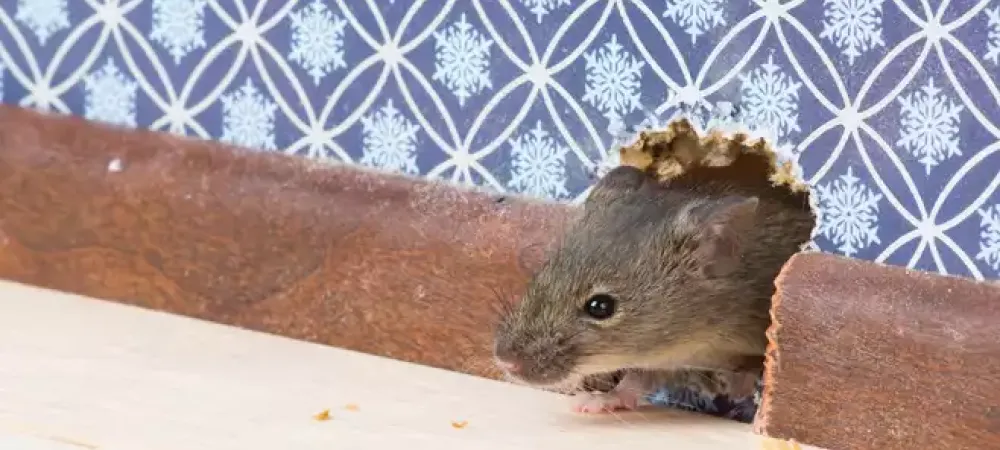
Rat droppings are about the size of a grain of rice and pointed at the ends; mouse droppings are smaller, roughly the size of a grain of rice cut in half, with blunt ends. Rats leave gnaw marks and grease trails along baseboards and pipes because they follow the same paths every night; mice explore more randomly and leave lighter, more scattered signs. The two require different bait placement, different exclusion work, and different follow-up schedules, so identifying which one you have before treatment starts saves time and money.
Why This Matters Before You Call Anyone
A lot of Richmond homeowners hear scratching in the attic or find droppings under the sink and assume it's "mice" because that's the word most people default to. But rats and mice aren't just a size difference. They behave differently, they nest differently, and a treatment plan built for one won't fully solve an infestation of the other. If a technician sets mouse-sized snap traps and small bait stations for what's actually a rat problem, you'll keep seeing activity weeks later and wonder why nothing's working.
How to Tell Rats and Mice Apart
| Sign | Rats | Mice |
|---|---|---|
| Droppings | ~3/4 inch, pointed ends, clustered near food sources | ~1/8–1/4 inch, blunt ends, scattered widely |
| Body size | 7–10 inches (not counting tail), thicker body | 2–4 inches (not counting tail), slimmer body |
| Travel pattern | Same route nightly, leaves dark grease trails | Explores randomly, lighter and thinner marks |
| Gnaw marks | Larger, rougher, can widen wood or soft metal | Smaller, thinner, mostly on packaging and cardboard |
| Sound | Louder, heavier scratching in walls or attics | Lighter, quicker movement near kitchens/cabinets |
Richmond sees two rat species most often, Norway rats and roof rats, both distinguishable from mice by the traits above.
Why the Treatment Isn't the Same
- Bait station placement and sizing differ because rats need larger stations set along established outdoor travel paths, while mouse stations go in tighter interior spots like cabinet corners.
- Exclusion work is more extensive for rats, since a rat can gnaw its way back through an existing crack, not just fit through a small opening like a mouse can.
- Trap type and number change too. Rat-sized traps and stations won't catch or hold rats if set at mouse density, which is usually why DIY traps "don't work."
- Follow-up timeline tends to run longer for rats, since colonies are smaller in number but more established in their territory.
When to Call a Professional
If you're seeing droppings you can't confidently identify, hearing activity in the walls or attic, or you've tried DIY traps without success, it's worth having someone take a look before the problem gets more established. Pest Solutions has provided pest control in Richmond, Henrico, Chesterfield, and the surrounding counties since 2002. As part of our rodent control in Richmond service, every inspection identifies the species first, so the treatment plan matches what's actually in your home. All services are backed by a money-back guarantee: if pests persist, we'll re-treat at no charge.
Frequently Asked Questions
How can I tell if it's a rat or a mouse in my house?
Check the droppings first. Rat droppings are about 3/4 inch long with pointed ends, while mouse droppings are 1/8 to 1/4 inch long with blunt ends. Rats also leave larger gnaw marks and dark grease trails along the paths they travel repeatedly, while mice leave lighter, more scattered signs.
Do rats and mice need different treatment?
Yes. Rats need larger bait stations placed along their established travel routes and more extensive exclusion work since they can gnaw openings wider, while mice respond better to smaller interior stations and tighter sealing. Using the wrong setup for either is a common reason DIY rodent control doesn't work.
Why didn't my mouse traps work on a rat problem?
Mouse-sized snap traps often aren't strong enough or positioned correctly to catch rats, which are heavier, more cautious, and follow specific travel paths. A rat infestation typically needs rat-specific trap placement and bait stations sized and located for their behavior.
Ready to find out what you're dealing with?
Every service is backed by a money-back guarantee.