
How Do You Tell the Difference Between a Bee Nest and a Wasp Nest?
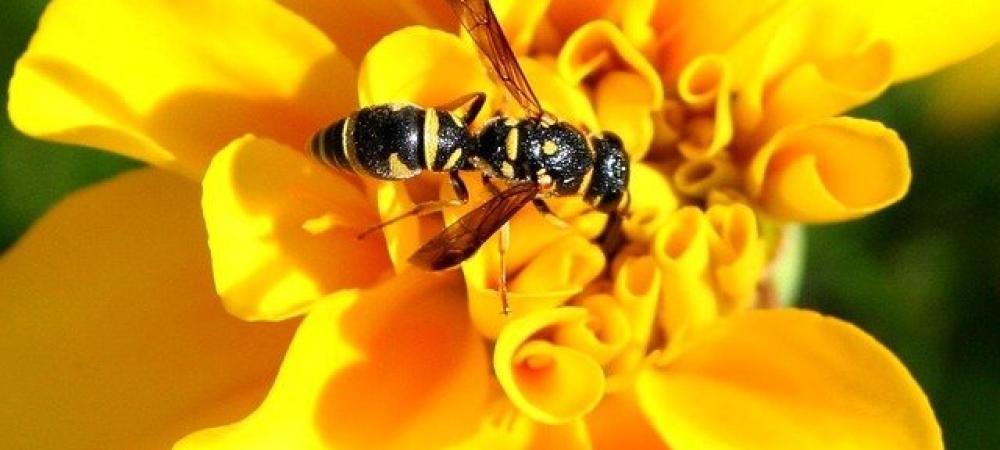
The clearest giveaway is material and texture. Bee nests (specifically honey bee comb) are made of smooth, waxy hexagonal cells, usually hidden inside a wall void, tree cavity, or other enclosed space. Wasp nests are made of a papery, gray material that looks like chewed wood pulp, and are far more often visible in the open, hanging from eaves, tucked under decks, or built into the ground.
Material Is the Fastest Way to Tell
Bees produce wax from glands in their abdomen and build smooth, uniform hexagonal comb. Wasps chew wood fiber mixed with saliva into a papery pulp, which dries into the layered, gray-brown material most people picture when they hear "wasp nest." If you can see the nest material directly, this is the single most reliable identifier: waxy and hexagonal means bees, papery and layered means wasps.
Where Each Nest Is Typically Located
Honey Bee Nests
- Wall voids and chimneys
- Hollow trees
- Attics and soffits
Wasp Nests
- Umbrella-shaped paper nests under eaves, deck ceilings, or porch corners
- Enclosed, football-shaped gray nests hanging from branches or structures (bald-faced hornets)
- Underground nests in old rodent burrows or loose soil (yellowjackets)
A nest built directly into the ground or inside a wall without visible comb is more likely a wasp species, since bees rarely nest fully underground.
Shape and Structure
| What you see | What it usually indicates |
|---|---|
| Smooth, hexagonal wax comb, often visible in layers | Honey bee nest |
| Open, umbrella-shaped paper comb with visible cells facing downward | Paper wasp nest |
| Fully enclosed, round or football-shaped gray paper nest | Bald-faced hornet nest (a wasp species) |
| No visible structure, insects flying in and out of a ground hole | Yellowjacket nest (underground, a wasp species) |
| Nest appears to be growing rapidly over just a few weeks | More consistent with a wasp colony, which grows faster in-season than an established bee colony |
Behavior Differences That Confirm It
Material and location settle most cases, but behavior is a useful secondary check:
- Honey bees are generally non-aggressive away from the nest and die after stinging once. Large numbers of bees calmly entering and exiting a single small opening in a wall or tree is a strong bee indicator.
- Wasps (including yellowjackets and hornets) can sting multiple times and are more likely to become aggressive if the nest is disturbed, especially yellowjackets defending a ground nest.
Why the Distinction Actually Matters
Bees and wasps require different responses for a real reason: honey bees are protected pollinators in many areas, and a bee colony found in a structure is often relocated rather than exterminated. Wasp nests, particularly yellowjacket and hornet nests near high-traffic areas, are typically removed outright due to the higher sting risk. Treating a bee colony like a wasp nest can result in unnecessary pollinator loss, while treating an aggressive wasp nest like a docile bee colony increases the risk of multiple stings.
When to Call a Professional
If you're not confident which one you're looking at, or if the nest is in a hard-to-reach spot like inside a wall void or high under the eaves, that uncertainty is itself the reason to call a professional rather than approach it. A trained bee and wasp control technician can identify the species from a safe distance, confirm whether it's a protected pollinator situation or a removal situation, and handle it accordingly.
Frequently Asked Questions
From a distance, yes, especially an enclosed bald-faced hornet nest, which is often mistaken for a bee nest because of its rounded, papery shape. Getting closer (safely) to check the material, waxy versus papery, is the most reliable way to tell.
Bald-faced hornets are a type of wasp, not a true hornet or a bee, despite the name. Their enclosed, football-shaped paper nests are one of the most commonly misidentified nests.
It's not recommended. Even non-aggressive honey bees can react defensively if a nest is disturbed incorrectly, and removal from a wall void or chimney often requires opening the structure, which is best handled by someone experienced with both bee safety and structural repair.
No. In most regions, wasp colonies do not survive winter and the nest is abandoned. However, that doesn't mean the location is nest-proof going forward, since new queens often look for shelter in the same type of nearby spot.
A licensed technician can identify it safely and handle it the right way.
Get a Free Quote